
How to Set Up an Indoor Cannabis Grow Room
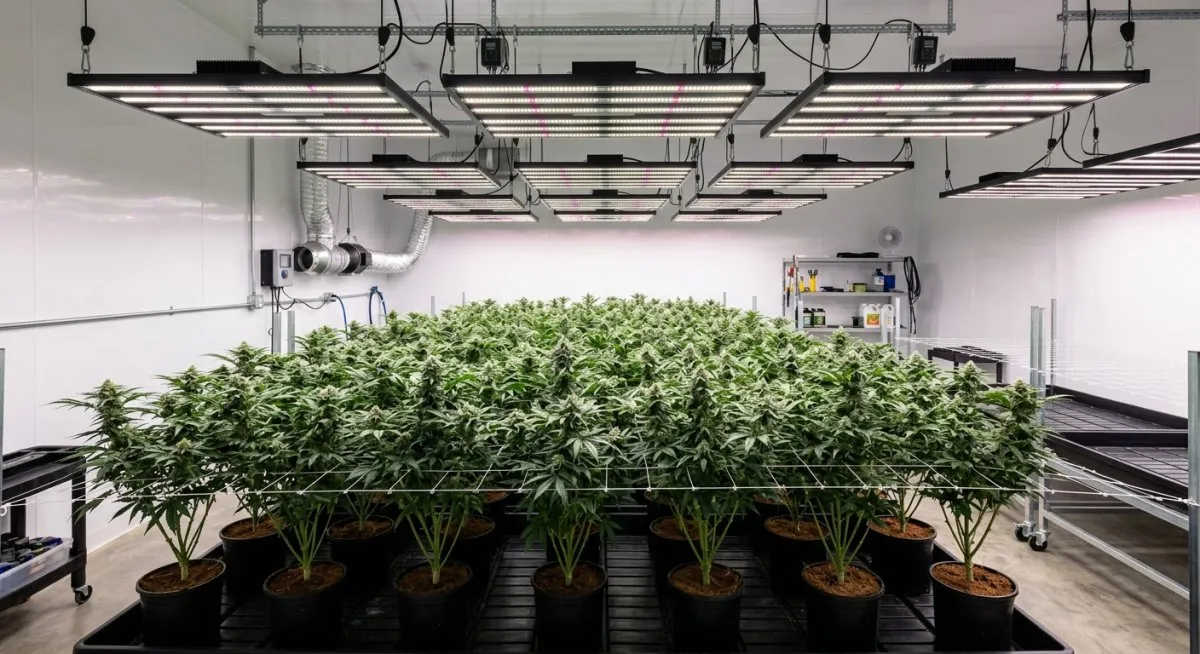
A good grow room is dark when the lights are off, keeps a steady 20–28 °C, changes its air every few minutes through a carbon filter, has a floor that can get wet, and runs on electrics sized for the load. Get those five things right before you buy plants or lamps and everything else becomes easier. This guide explains how to choose the space, seal it, ventilate it, wire it safely and lay it out, with a checklist at the end.
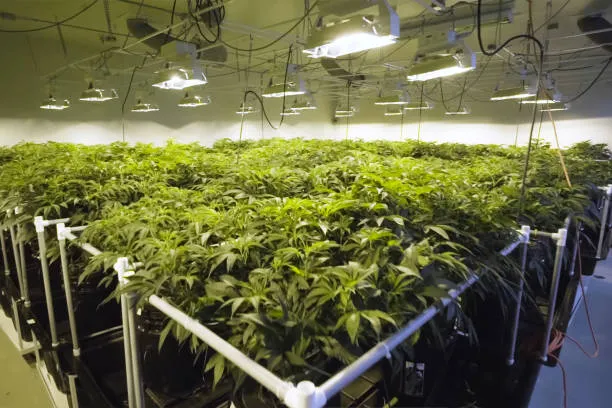
Room or grow tent?
For one to four plants, a grow tent is usually the better choice: it is already light-proof and reflective, has ports for ducting and fits in a corner. A whole room makes sense when you want more space, several tents in one place, or separate areas for mother plants, vegetative growth and flowering. Many growers combine both: a tent inside a room, which is the easiest way to control light and smell.
Choosing the right space
| Space | Pros | Watch out for |
|---|---|---|
| Spare bedroom | Normal temperatures, power and water nearby | Carpet and windows to cover, neighbours through the walls |
| Basement or cellar | Cool and stable, easy to make dark, discreet | High humidity, little fresh air, cold in winter |
| Attic | Space, often unused | Very hot in summer, cold in winter, low ceilings |
| Garage or shed | Concrete floor, separate from the house | Big temperature swings, insulation needed |
| Wardrobe or closet | Cheap, small, easy to hide | Heat builds up fast: needs an extractor fan |
Whatever you choose, it needs: total darkness when lights are off, a stable temperature, a way to get air in and out, a nearby water source and a safe electrical supply. Ceiling height matters too: plants, pots and a lamp hanging 30–60 cm above the canopy need at least 1.8–2 m.
Light-proofing and reflective walls
During the dark period (12 hours a day in flowering) plants need real darkness. Light leaks confuse photoperiod plants and can push them to produce male flowers. To check, switch off the grow lights during the day, close the door, wait a few minutes until your eyes adjust and look for any light: around the door, at the window, at cable and duct holes. Seal every leak with blackout tape, foam strips or a door brush.
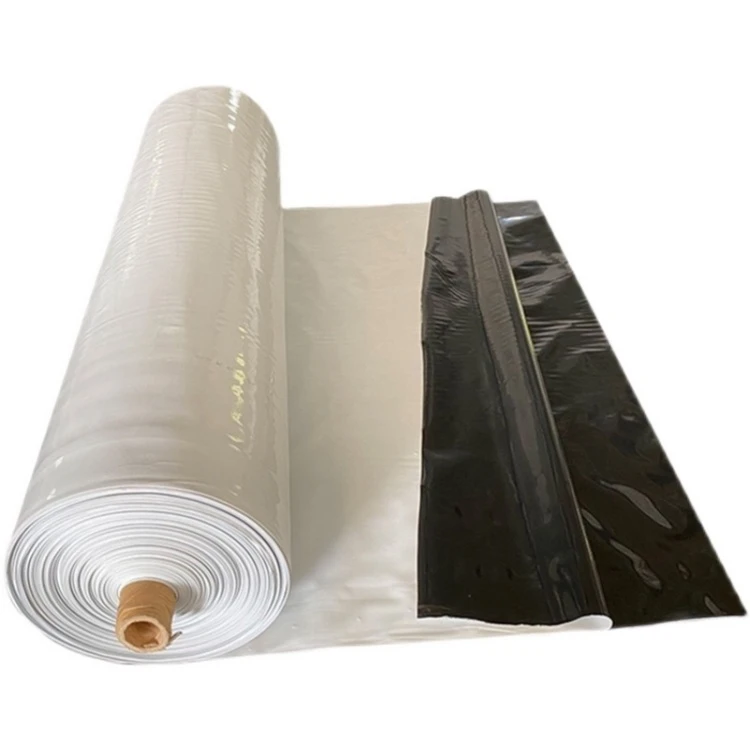
Cover the walls with something that reflects: panda film (black on one side, white on the other), mylar, or simply flat white paint, which reflects almost as well and is easier to clean. Avoid crumpled foil: it reflects unevenly and can create hot spots.
Ventilation: fresh air in, warm air and smell out
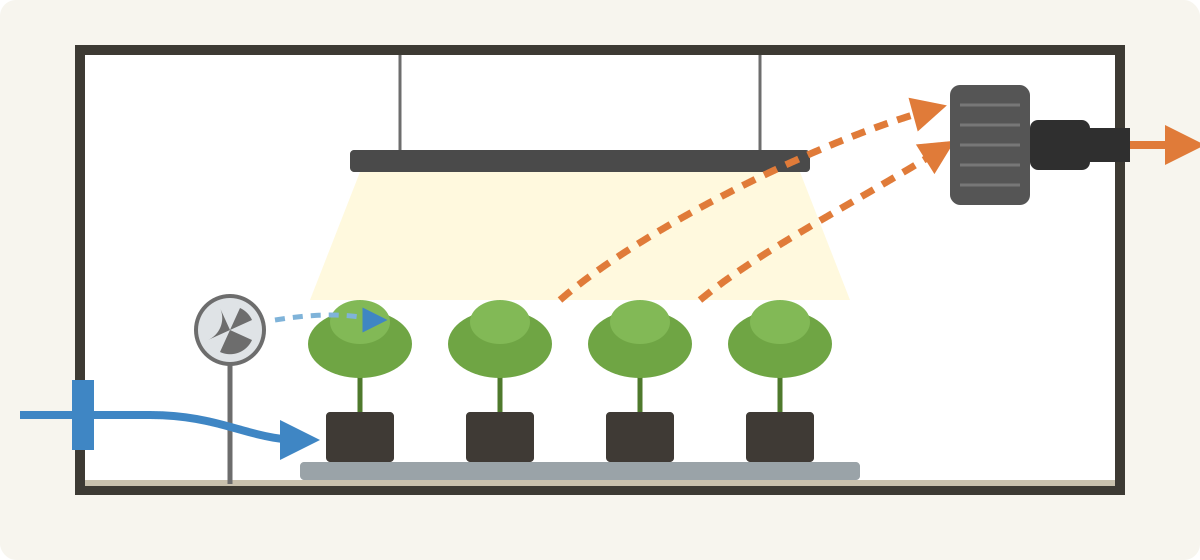
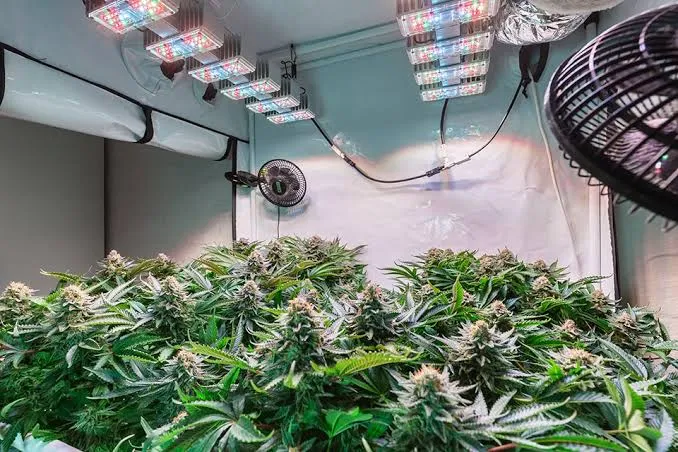
Plants use up the CO₂ in the air, lamps make heat, and the plants themselves release a lot of water. An extractor fan solves all three: it pulls warm, humid air out at the top of the room through a carbon filter, which removes the smell, while fresh air comes in low on the opposite side. Small clip fans inside move the air around the leaves.
How big an extractor fan you need
- Calculate the room volume: length × width × height. A room of 3 × 2.5 × 2.4 m is 18 m³.
- Aim to change all the air about once every 1–3 minutes: multiply the volume by 20–60 to get m³/h. For 18 m³ that is roughly 360–1,080 m³/h.
- Add 25–50% for the resistance of the carbon filter and ducting.
- Choose a fan with a speed controller, so you can run it slower (and quieter) when it isn't hot.
Keep the room under slight negative pressure — the extractor pulls more than comes in — so that air (and smell) leaks inwards, never out. The passive intake opening should be about 1.5–2 times the size of the exhaust duct; if it isn't enough, add a smaller intake fan.
Temperature and humidity
| Stage | Lights on | Lights off | Relative humidity |
|---|---|---|---|
| Seedlings and clones | 22–26 °C | 20–22 °C | 65–75% |
| Vegetative growth | 22–28 °C | 18–22 °C | 50–70% |
| Flowering | 20–26 °C | 18–21 °C | 40–50% |
| Last 2 weeks of flowering | 18–24 °C | 16–20 °C | 35–45% |
A cheap digital thermo-hygrometer with min/max memory, placed at canopy height, tells you what really happens while you're not looking. Insulating the walls (rigid foam panels work well) makes the room much easier to keep stable. In a cellar a dehumidifier is often essential; in an attic, an air conditioner may be. Remember that both draw power: count them in your electrical budget.
Lighting
Modern LED fixtures are now the standard choice: they produce far less heat than HPS lamps for the same light, which makes temperature control easier. As a rough guide, plan for 300–450 W of good-quality LED per square metre of canopy for flowering, and about half that for vegetative growth. Hang the lamps on adjustable ratchet hangers so you can raise them as plants grow, and run them on a timer: 18 hours on / 6 off for growth, 12/12 for flowering photoperiod plants.
Electrical safety
A grow room runs lamps, fans and climate equipment for many hours a day, often near water. This is where most dangerous mistakes happen.
Know your limits
- Your household supply: in many European homes the contract allows only 3–6 kW for the whole house. A 600 W lamp, a fan and a dehumidifier plus the washing machine can trip the main switch.
- Each circuit: a typical European 16 A circuit at 230 V carries about 3,600 W; in North America, a 15 A circuit at 120 V about 1,800 W. Don't load any circuit above 80% for long periods.
| Example equipment | Watts |
|---|---|
| 2 × LED 300 W | 600 |
| Extractor fan with controller | 60–150 |
| 2 clip fans | 40 |
| Dehumidifier | 200–400 |
| Total | ~900–1,200 |
Wiring rules
- Plug everything into a circuit protected by a residual-current device (RCD / GFCI).
- Use good-quality power strips rated for the load, with a switch; never plug one power strip into another.
- Keep cables and sockets off the floor and away from pots, trays and reservoirs. Mount them on the wall at hand height.
- Use mechanical or digital timers rated for the lamp's power.
- Anything beyond plugging into existing sockets — new circuits, new sockets — is a job for a qualified electrician.
Floor, water and drainage
Water will be spilled. A concrete or tiled floor is ideal; carpet and wood need a waterproof sheet that runs a few centimetres up the walls. Put pots in saucers or a large tray so run-off doesn't reach the floor. Plan where water comes from (a tap nearby or a reservoir filled with a hose) and where it goes: a wet-dry vacuum, a small pump or a floor drain. Keep pH and EC meters, measuring jugs and nutrients on a shelf, not on the floor.
Layout: three zones
- Canopy zone: plants under the lamps, reachable from at least one side without leaning over the whole room. Leave 50–60 cm walkways if you can.
- Equipment zone: controllers, timers, power strips, dehumidifier, reservoir. Off the floor and away from the water.
- Work zone: a small table or clear floor area to mix nutrients, transplant and inspect plants.
Discretion and neighbours
The things that give a grow room away are smell, noise, light and heat. A carbon filter matched to the fan handles smell; a duct silencer and a fan speed controller reduce noise; blackout curtains and sealed windows keep light in. Check the rules where you live: in many countries home growing is illegal or allowed only within strict limits.
Final checklist before you start
- The room is completely dark with the lights off, door closed.
- Walls are reflective (panda film, mylar or flat white paint).
- Extractor fan and carbon filter installed, intake low on the opposite side, negative pressure.
- Thermo-hygrometer at canopy height; one full day of readings with lamps on.
- Total power calculated; RCD-protected circuit; cables off the floor.
- Waterproof floor, trays under the pots, a plan for water in and out.
- Timers set and tested.
When the room passes this list, it's time to choose your genetics — for small spaces, compact or autoflowering seeds are the easiest start — and to germinate your seeds.
FAQ
How big should a grow room be?
For a first grow, 1–2 m² of canopy is plenty: it's easy to light, cool and keep clean. A bigger room multiplies equipment, power and mistakes.
Do I need a carbon filter?
If anyone else might notice the smell, yes. Flowering cannabis is very aromatic, and a carbon filter on the extractor is the only reliable solution.
Can I grow in a room with a window?
Yes, but cover it completely: blackout film or a board on the inside, sealed at the edges. Light leaks are the most common problem in converted bedrooms.
How much electricity does a small grow room use?
A typical setup with 600 W of LED, a fan and a dehumidifier uses about 12–18 kWh per day in growth (18 hours of light) and 9–14 kWh per day in flowering.
For outdoor growing, see the guide to guerrilla growing.