
How to Buy Cannabis Seeds: A Beginner's Guide
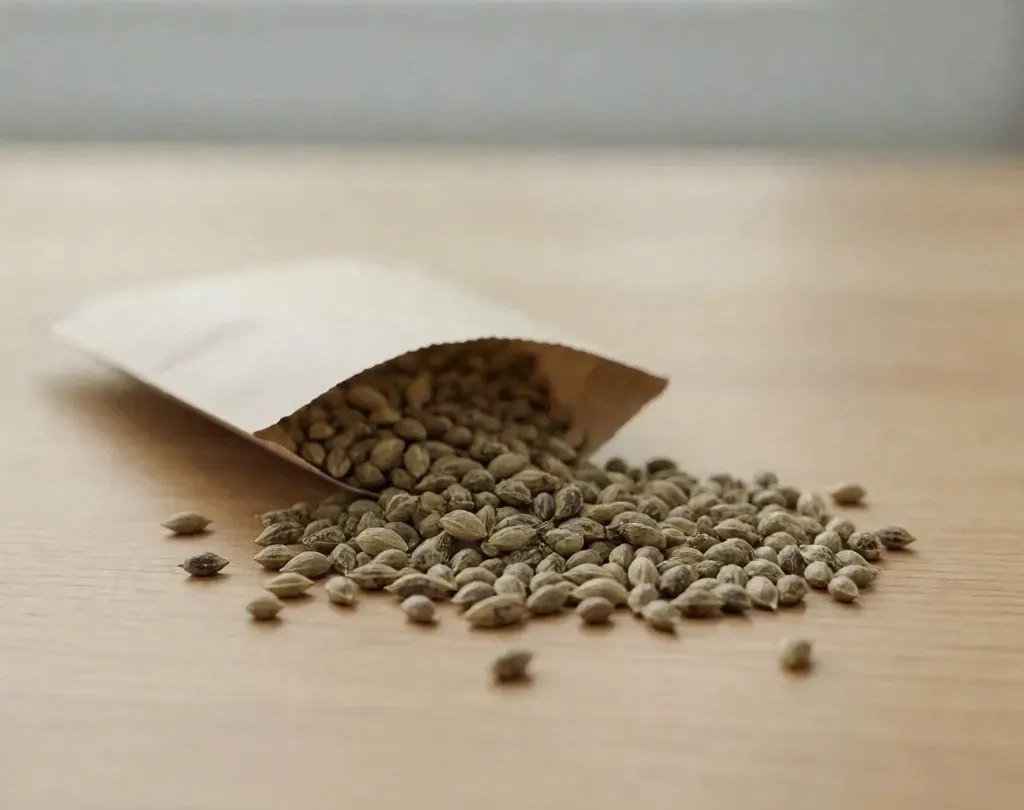
To buy the right cannabis seeds, decide three things before you look at prices: the seed type (feminized, autoflowering or regular), a strain that fits your space and climate, and a seed bank with a solid track record. Genetics set the ceiling of your harvest — potency, aroma, yield and plant size are decided the moment you choose the seed. This guide explains each choice in plain terms, so you can buy with confidence instead of following the highest THC number on the label.
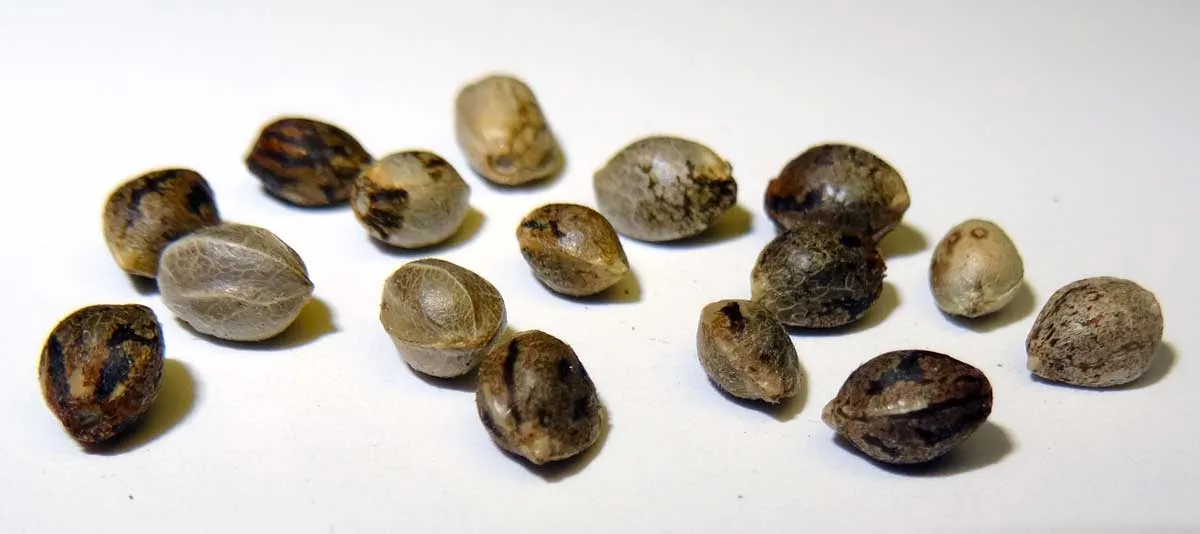
Feminized, autoflowering or regular: the three seed types
Every seed bank sorts its catalogue into three types. Picking the right one for your setup is the first real decision of your grow.
Feminized seeds
Feminized seeds grow into female plants in almost every case, and only females produce the buds growers are after. They are made by pollinating a female with pollen from another female that has been induced to produce male flowers; that pollen carries only female genetics. You don't have to identify and remove males, so every seed you germinate counts. For most growers this is the most practical choice.
Autoflowering seeds
Autoflowering strains carry genes from Cannabis ruderalis, a type adapted to short northern summers. They start flowering on their own after 3–5 weeks, whatever the light schedule, and usually go from seed to harvest in 9–12 weeks. They stay small, which suits tents, balconies and discreet gardens, and outdoors you can fit more than one crop in a season. The trade-off: they can't be kept in the vegetative stage to grow bigger, so mistakes early on cost yield.
Regular seeds
Regular seeds give roughly half males and half females. Breeders use them to make their own crosses, and some growers prefer them for taking clones from a strong mother plant. You need to recognise males in the first weeks of flowering and remove them before they release pollen.
| Feminized | Autoflowering | Regular | |
|---|---|---|---|
| Female plants | ~99% | ~99% (if feminized auto) | ~50% |
| Starts flowering | When you switch to 12/12 light (indoors) or as days shorten | By itself, after 3–5 weeks | Like feminized |
| Seed to harvest | 3–6 months | 9–12 weeks | 3–6 months |
| Plant size | Medium to very large | Small to medium | Medium to very large |
| Best for | Most growers, bigger yields | Beginners, small spaces, fast harvests | Breeding, mother plants |
Indica, sativa and hybrids
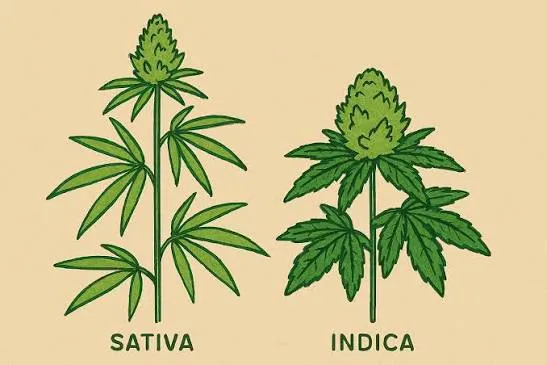
After the seed type, the genetic background tells you how the plant will grow. These labels are broad — almost every modern strain is a hybrid — but they are still useful for planning space and time.
- Indica-dominant: short and bushy, broad leaves, flowering in 7–9 weeks. Easy to fit in a tent or a small room.
- Sativa-dominant: tall and stretchy, narrow leaves, flowering in 10–14 weeks or more. Needs height and a long, warm season outdoors.
- Hybrids: a mix of both. A good breeder states which side dominates and the expected height and flowering time.
Want to see how a specific strain actually grows? Real grow reports from other growers show height, yield and problems far better than a product description.
How to choose a strain for your space and climate
- Height available: in a tent of 1.6–1.8 m, choose autos or compact indica-dominant photoperiods.
- Outdoor climate: in places with cool, rainy autumns, pick strains that finish by late September/early October and are described as mould-resistant.
- Experience: as a first grow, choose a strain sold as easy or resistant. High-THC "cup winners" are often fussier.
- Effect and taste: read the terpene profile and the description of the effect, not just the THC percentage.
How to read a seed listing
Listings look alike, but the details tell you a lot. A good one includes:
- Genetics: the parent strains of the cross.
- Flowering time: in weeks from the switch to 12/12 for photoperiods, or from seed for autos.
- Yield: in g/m² indoors or g/plant outdoors. Treat it as the best case under ideal conditions.
- THC and CBD: approximate figures from the breeder's selected plants; your result will vary.
- Aroma and terpenes: useful for choosing taste, and for knowing how strong the smell will be.
Tip: the same strain from the same breeder can cost very different amounts from one shop to another. Compare prices per pack in the seed catalogue before you order.
What to look for in a seed bank
The shop matters as much as the strain. A reliable seed bank stores seeds correctly, sells genuine breeder packs and stands behind its orders. Check:
- Track record: years in business and independent reviews, not just testimonials on its own site.
- Original breeder packs: sealed packs from named breeders, not loose "house" seeds of unknown origin.
- Germination guarantee: some banks replace seeds that don't sprout, within stated conditions.
- Shipping to your country: discreet packaging, tracking, and what happens if a parcel is lost or held at customs.
- Payment options: card payments are not always available in this sector; bank transfer and crypto are common.
Well-known names include Sensi Seeds and Dutch Passion (two of the oldest European breeders), Barney's Farm (high-THC photoperiods), Mephisto Genetics (autoflowers) and Humboldt Seed Company (outdoor genetics). You can browse breeders and shops on our seed banks page.
How many seeds to buy
Packs usually contain 1, 3, 5 or 10 seeds. If you are growing a strain for the first time, buy a few more than the number of plants you want: not every seed germinates, and growing several plants of the same strain lets you see different phenotypes — plants with slightly different shape, smell and yield — and keep the best one as a mother for clones.
| Plants you want | Seeds to buy (feminized) |
|---|---|
| 1–2 | 3 |
| 3–4 | 5 |
| 6–8 | 10 |
When the seeds arrive
Check that the packs are sealed and the seeds are intact. If you won't germinate them within a few weeks, keep them in the original pack inside an airtight jar with a silica gel sachet, in the fridge: our guide on storing cannabis seeds explains how to keep them viable for years. When you're ready, follow the step-by-step guide to germinating cannabis seeds.
FAQ
Are feminized seeds better than regular seeds?
For most growers, yes: you don't waste space and time on male plants. Regular seeds are mainly for breeding and for selecting mother plants.
Are autoflowering seeds good for beginners?
They are a good choice for small spaces and quick harvests, and they forgive light leaks. They are less forgiving of early stress, though, because they can't be kept in the growth phase longer to recover.
Is a higher THC percentage always better?
No. THC figures come from the breeder's best plants and say nothing about taste, effect or how easy the strain is to grow.
How long do cannabis seeds stay viable?
Stored cool, dry and dark, most seeds germinate well for 2–5 years, and many still sprout after longer.
Legal note: the rules on buying, owning and germinating cannabis seeds differ from country to country. Check the law where you live before you order.